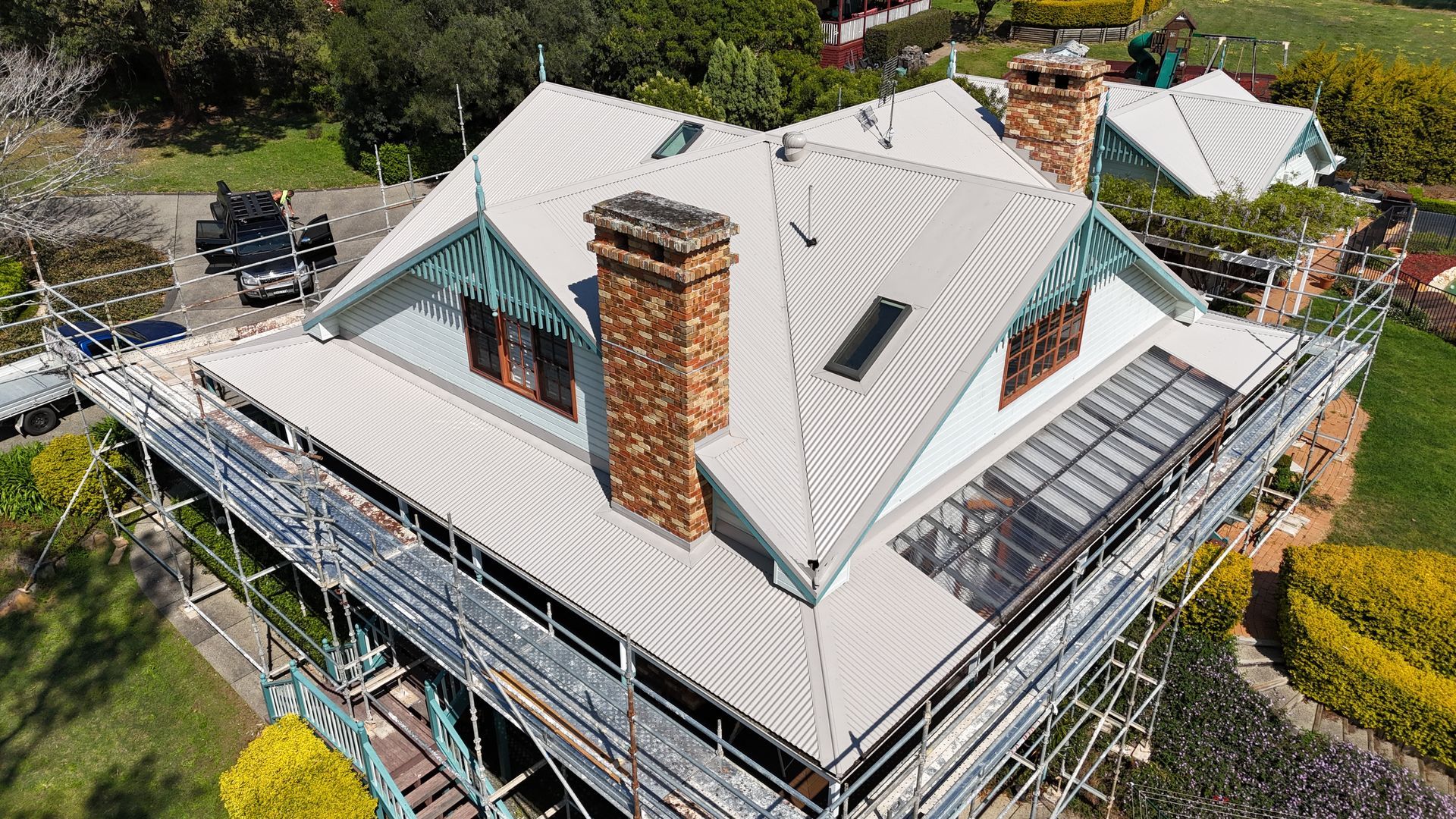
Can a Metal Roof Be Repaired?
Usually, yes. A metal roof rarely fails all at once. Most problems start at the details: the screws, the flashings, the overlaps between sheets, and the points where pipes, vents and skylights pass through the roof. Those details can be repaired or replaced on their own, without touching the rest of the roof.
The real question isn't whether a repair is possible, but whether it's the right call for your roof. A repair that keeps a sound roof going is good value. Repeated repairs on a roof that is failing everywhere only delay the inevitable. This guide explains how to tell the difference, whether you have Colorbond, Zincalume or older galvanised iron.
If you already know you need a repair, see our metal roof repair service.
Common Metal Roof Problems That Can Be Repaired
Loose, Rusted or Leaking Screws
Corrugated and other ribbed metal roofs are held down by screws with a rubber sealing washer. Over time, sun exposure hardens and cracks those washers, and the roof's expansion and contraction can work screws loose. Water then gets in around the screw holes.
Re-screwing replaces old fasteners with new screws and washers sized correctly for the existing holes. It's one of the most common and effective metal roof repairs.
Small Areas of Surface Rust
Rust that sits on the surface, around screw heads, along cut edges, or where metal filings were left behind after installation, can usually be treated. The area is cleaned back, treated and touched up, or the affected section is replaced. What matters is whether the rust is only on the surface or has eaten through the steel.
Failed Flashings
Flashings seal the junctions of your roof: ridges, valleys, walls, chimneys and penetrations. A flashing that has lifted, corroded or was poorly installed is a frequent source of leaks. Flashings can be replaced individually without disturbing the main roof sheets.
Isolated Leaks
A leak in one spot, with the rest of the roof in good condition, is almost always a repair job. The challenge is finding the true source. Water can travel along a sheet or batten before it shows up on your ceiling, so the stain isn't always directly below the problem.
Storm Damage to a Few Sheets
Lifted, dented or punctured sheets after a storm can often be replaced individually. If the damage was caused by a storm, it may be covered by your home insurance. Our guide to making a roof insurance claim in NSW walks through the process.
The Middle Option: Replacing Only Some Sheets
Many homeowners assume the choice is between a small repair and a full re-roof. There's often a third option: replacing only the sheets that have failed.
This works well when the damage is concentrated in one area. For example, one side of the roof that takes the worst of the weather, a section under an overhanging tree that holds moisture and leaves, or the area around a corroded gutter or penetration. The rest of the roof stays in place.
There are trade-offs. New sheets will look different from older, weathered sheets, even in the same Colorbond colour, and some older roof profiles may no longer be available in exactly the same shape. A good roof plumber will tell you upfront whether a partial replacement will match acceptably and seal properly against the existing sheets.
Signs It's Time to Replace Your Metal Roof
Replacement starts to make sense when the problems are no longer isolated. Look for:
- Rust that has eaten through the steel: holes, flaking, or sheets that crumble when pressed, rather than surface staining
- Leaks in several different places, or leaks that keep coming back after repairs
- Widespread corrosion along the laps where sheets overlap, which is hard to repair properly
- Sagging or uneven sections, which can point to problems with the battens or roof structure underneath
- A roof that has been patched many times, where the patches themselves are now failing
- Old galvanised iron that is corroding across the whole roof surface
If you're seeing several of these at once, ongoing repairs are likely to cost more over time than a new roof. A full replacement also lets you upgrade sarking and insulation, fix any batten problems, and choose a modern profile and colour.
For a broader checklist that covers tile roofs too, see 10 warning signs your roof needs repair.
Repair vs Partial Replacement vs Full Re-Roof
| Option | Best when | What's involved |
|---|---|---|
| Repair | Damage is isolated and the roof is otherwise sound | Re-screwing, rust treatment, flashing replacement, leak sealing |
| Partial replacement | Damage is concentrated in one area | Replacing the failed sheets and flashings in that section |
| Full re-roof | Corrosion or leaks are widespread | Removing old sheets, checking battens, new sarking and new roof sheets |
What About Repainting a Rusty Metal Roof?
Repainting is often promoted as an alternative to replacement. It can be a good option for an older roof that is structurally sound but faded or showing light surface rust. It improves the look and adds a layer of protection.
What repainting can't do is fix steel that has rusted through. Paint over a perforated sheet won't stop a leak, and paint applied over poorly prepared rust will flake off. Before you pay for a repaint, have the roof inspected to confirm the steel underneath is still sound. If sheets need replacing, that work should happen before any coating goes on.
Coastal Homes: Why Salt Air Changes the Equation
Salt spray is one of the biggest causes of metal roof corrosion in NSW. Homes near the coast, across the South Coast, Wollongong and the Illawarra, the Central Coast, Newcastle and Sydney's Eastern Suburbs, need closer attention.
On coastal roofs:
- Salt builds up in areas that rain doesn't wash clean, such as under eaves and along overlaps, and corrosion often starts there first
- Screws and flashings tend to corrode before the roof sheets themselves
- Steel manufacturers publish guidance on which roofing products suit coastal and marine sites, and the closer a home is to breaking surf, the more corrosion-resistant the product needs to be
Regular inspections and rinsing the areas that rain doesn't reach help coastal roofs last longer. When replacement is needed, choosing the right grade of steel for your exposure matters as much as choosing the colour.
Other Causes of Premature Rust
Some rust problems come from how the roof was installed or what sits on it, not from age:
- Metal filings (swarf) left on the roof after cutting or drilling, which rust and stain the surface
- Incompatible metals, such as water running off copper pipes or fittings onto steel roofing
- Debris build-up in valleys and gutters that holds moisture against the steel
- Overhanging trees that drop leaves and keep sections of the roof damp
These are worth fixing even on a newer roof, because they'll keep causing damage until the source is dealt with.
What a Professional Metal Roof Inspection Should Cover
A proper inspection should tell you exactly what's wrong and what your options are. A thorough metal roof inspection checks:
- The condition of the roof sheets, including any rust that has gone through the steel
- Screws and sealing washers, especially around problem areas
- Flashings at ridges, valleys, walls and penetrations
- The laps between sheets, where corrosion often hides
- Gutters, box gutters and valleys for blockages and corrosion
- Signs of water entry in the roof space, and the condition of battens and sarking where accessible
You should come away with a clear recommendation of repair, partial replacement or full re-roof, and the reasons behind it. Be cautious of anyone who recommends a full replacement without explaining why repairs won't work.
Frequently Asked Questions
Can you paint over rust on a Colorbond roof?
Only if the rust is on the surface. Light surface rust can be cleaned back, treated and painted. Rust that has gone through the steel needs the affected sheet or section replaced first, because paint won't seal a hole or stop a leak.
Can I repair my metal roof myself?
We don't recommend it. Working at heights is dangerous, metal roofs are slippery when wet or dusty, and an incorrectly installed screw or flashing can create new leaks. Roof plumbing in NSW should be carried out by a licensed roof plumber working to the AS 1562.1 standard for metal roofing.
Is it cheaper to repair or replace a metal roof?
A repair almost always costs less upfront. Replacement becomes the better-value option when the roof needs repeated repairs, or when corrosion is widespread enough that repairs will keep failing. The only way to compare properly is to have the roof inspected and get a quote for both options.
Does home insurance cover metal roof replacement?
It depends on the cause and your policy. Sudden damage from a storm, hail or a fallen tree is often covered, while many policies exclude damage from gradual wear, rust or lack of maintenance. Check your policy wording, and see our roof insurance claim guide for how the process works.
What should I replace an old metal roof with?
Most metal re-roofs in NSW use Colorbond or Zincalume steel. The right choice depends on your home's style, your exposure to salt air, and your budget. Our Colorbond roofing guide compares Colorbond and Zincalume and covers profiles and colours. If you're weighing up a switch from tiles, read metal vs tile roofing.
Get an Honest Metal Roof Assessment
If you're not sure whether your roof needs a repair or a replacement, Statewide Roof Plumbing can inspect it and give you a straight answer. Our licensed roof plumbers handle everything from re-screwing and leak repairs to full re-roofs across NSW and ACT. See our metal roof repair services for more.
Call 0432 325 497 or email info@swrp.com.au to book a free roof inspection.